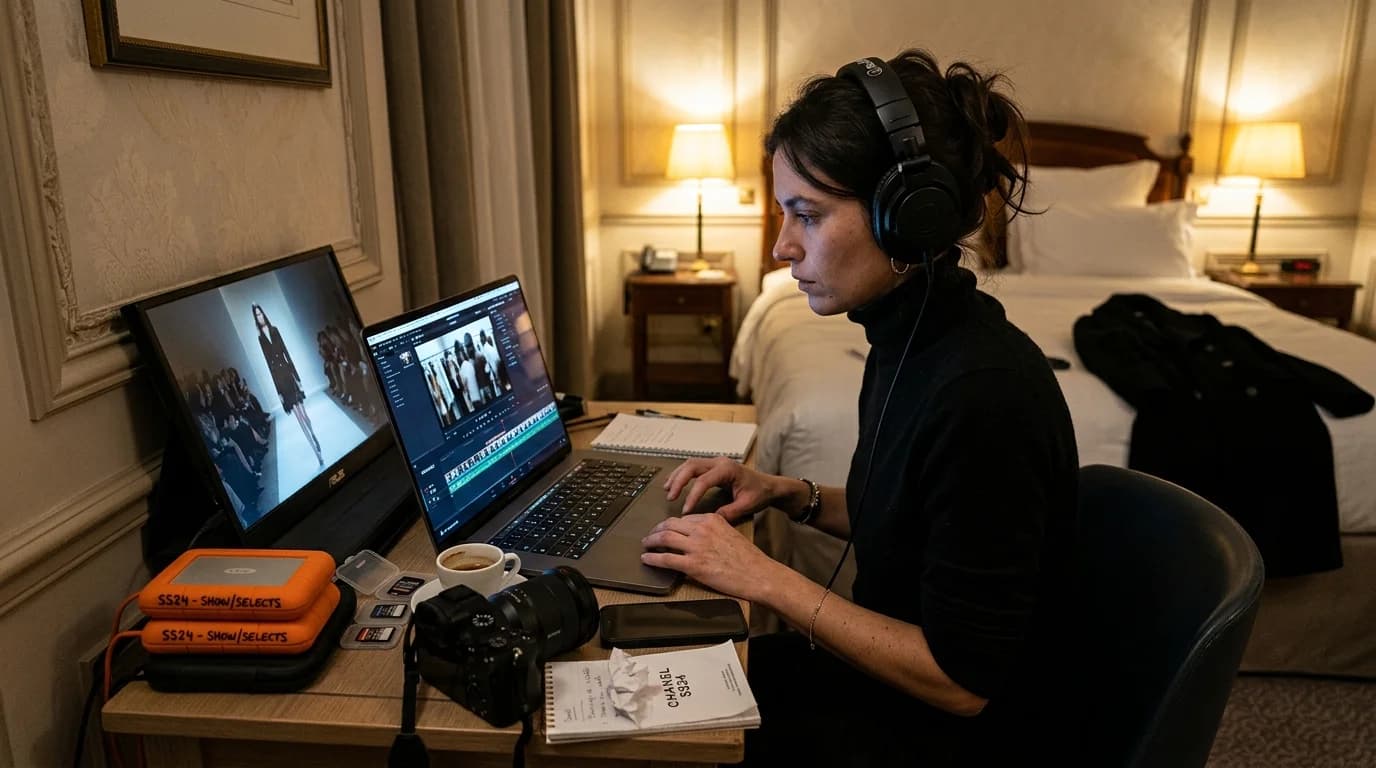
The AI generates raw material. Music, pacing, and mood decisions in post-production determine whether that material reads as fashion or as a tech demo.
Two editors can take the same five AI-generated clips and produce completely different videos. One cuts to a minimal electronic beat at 2-second intervals — TikTok content. The other holds each clip for 5 seconds over an ambient track — campaign film. Same footage. Different editorial decisions. Entirely different result.
This guide covers the three post-production variables that shape how AI fashion video feels: music selection, edit pacing, and tonal direction.
Music selection
Music is the fastest way to give AI footage emotional context. Generated clips have no inherent mood. They're visual raw material. The track underneath creates the feeling.
Minimal electronic works for commercial and social content. Clean beats, sparse instrumentation, rhythmic consistency. This gives you predictable cut points (every beat, every bar) and reads as modern and professional. Good for lookbook videos and product presentations.
Ambient and atmospheric works for editorial and campaign content. Textural rather than rhythmic. Synthesizer pads, field recordings, slow builds. This style doesn't dictate cut points — you cut where the garment tells you to. The result feels more contemplative, more "fashion." Good for campaign videos and homepage heroes.
Curated editorial tracks, songs with cultural references, work for brand-building content where the music choice itself is a statement. A Japanese ambient track says something different from a French house track. The music positions the brand culturally. Riskier but more distinctive.
Skip lyrics, almost always. Lyrics pull attention from the clothes. The viewer starts processing words instead of looking at the garment. Instrumental versions of vocal tracks work if the melody carries the mood.
Volume: quieter than you think. The music supports the visuals. If the viewer notices the music more than the clothes, it's too loud. Mix at 60-70% of what feels right and you'll be closer to correct.
Edit pacing
Pacing is how long each clip holds and how quickly you cut between them. It determines whether the video reads as urgent, contemplative, commercial, or editorial.
Social pacing (2-3 seconds per clip). Fast cuts. High energy. Each clip has to justify its screen time in the first frame. This works for TikTok and Reels where attention is measured in milliseconds. Cut on the beat if the music has one.
Lookbook pacing (4-6 seconds per clip). Medium speed. Each garment gets enough time to register. Wide shot for 4-5 seconds, then detail for 3-4 seconds. This is the standard lookbook video rhythm.
Campaign pacing (5-8 seconds per clip). Slow. Deliberate. Each clip breathes. The viewer settles into the image. This produces the elevated, editorial feel that campaign video requires.
The test: watch the edit with fresh eyes and notice when you feel impatient. That's the cut point. If a clip loses you after 4 seconds, cut it at 4. If it holds you for 7, let it play. Trust boredom as a signal.
Mood and tonal direction
Mood is the emotional register of the video, set by music, pacing, color grading, and lighting all working together.
Quiet luxury. Slow pacing. Muted color grade (desaturated, low contrast). Ambient music. Soft diffused lighting. Natural fabrics in neutral tones. Understated, confident, expensive without trying.
Sharp editorial. Medium pacing with hard cuts. High-contrast color grade. Minimal electronic music. Dramatic lighting. Structured garments in dark tones. Precise, intentional, don't look away.
Romantic and soft. Slow pacing with dissolves. Warm color grade (amber push). Ambient or acoustic music. Golden hour or window light. Flowing fabrics in warm neutrals. Gentle, intimate, unhurried.
Avant-garde. Irregular pacing (some clips 2 seconds, some 8). Desaturated or monochrome grade. Experimental sound or silence. High-contrast lighting. Deconstructed or unconventional silhouettes. We don't care if you're comfortable.
Syncing cuts to music
If your track has a beat, cut on it. Sounds simple but it transforms the video. When visual changes land on musical beats, the edit feels intentional. When they're off-beat, it feels random.
On the beat: hard cuts between garments. Each new look arrives with a musical event (kick drum, synth hit, bass note).
Between beats: cross-dissolves and slow transitions. These soften the rhythm and suit contemplative pacing.
On the phrase: major editorial transitions (wide shots to details, location shifts) should align with musical phrases — 4-bar or 8-bar sections. The viewer feels the structure without consciously hearing it.
Building an arc in 30 seconds
Even a 30-second fashion video benefits from a simple dramatic arc.
Opening (5-7 seconds). Atmosphere. Slow pace. Establish the mood. The first frame determines whether the viewer stays, but these opening seconds set a tone rather than sell a garment.
Middle (15-20 seconds). The garments. This is the core. Show the looks at whatever pace matches your editorial intent. Build intensity slightly: start with a still shot, then movement, then a more dramatic angle or a richer detail.
Close (5-8 seconds). Resolve. Return to atmosphere or hold on the strongest image. The energy should settle, not peak. End clean. The last frame should feel like a period, not a comma.
This arc works for everything from lookbook videos to campaign pieces to social content. Scale the duration to the platform.
FAQ
What music works best for fashion video?
Instrumental tracks without lyrics. Minimal electronic for commercial content, ambient for editorial, curated tracks for brand-building. The music should support the clothes, not compete with them. Mix quieter than feels right. If you notice the music more than the garments, it's too loud.
How do I choose the right pacing for my fashion video?
Match pacing to intent. Social content: 2-3 seconds per clip. Lookbook: 4-6 seconds. Campaign: 5-8 seconds. The test: watch the edit and notice when boredom hits. Cut there.
How do I create mood in AI-generated fashion video?
Music, pacing, and color grading working together. Quiet luxury uses slow pacing, muted grades, and ambient music. Sharp editorial uses hard cuts, high contrast, and electronic beats. The combination creates the emotional register, not any single element alone.
Should I sync cuts to music in fashion video?
Yes. Cut on the beat for hard transitions between garments. Use dissolves between beats for softer pacing. Align major editorial shifts with musical phrases. The sync doesn't need to be exact, but landing major cuts on musical events makes the edit feel intentional.