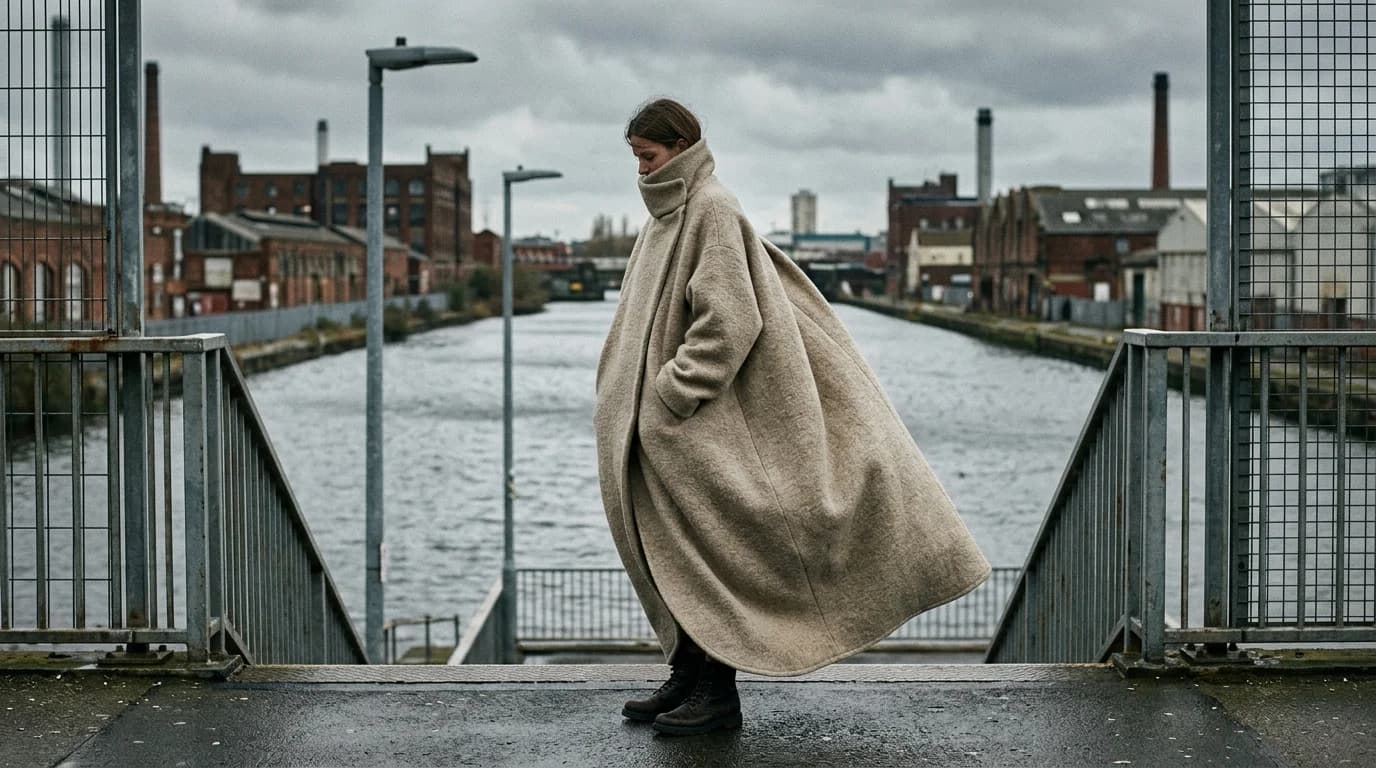
Silhouette is the first thing you register. Before color, before fabric, before any surface detail, the shape of a garment against the body tells you what you're looking at. Five emerging designers are doing the most compelling silhouette work in 2026, and they share one trait: none of them start by sketching a shape. They start with a constraint and let the shape follow.
You won't find these names in department stores yet. They show at smaller fashion weeks, turn up on prize shortlists, and sell through direct channels. Here's who is doing it best.
1. Duran Lantink — Amsterdam
Duran Lantink is the most exciting name on this list. The label builds garments from other garments, working with deadstock and donated pieces from other fashion houses, deconstructing and recombining them into new shapes. A sleeve from one coat becomes a bodice panel. A skirt gets recut and grafted onto a jacket.
The silhouettes are unpredictable because the source material dictates what's possible. There is no way to plan a trapeze shape when you're working with whatever arrives in the studio that week. This constraint produces forms that a designer working from scratch would never reach: lopsided volumes, asymmetric hems, proportions that break every rule of balance. Lantink's shapes are refined but never controlled, and that unresolvable tension is why major brands keep coming to him for collaborations. The shapes simply cannot be replicated through a normal design process.
2. Ester Manas — Brussels
Ester Manas and Balthazar Delepierre run their label out of Brussels with a deceptively simple idea: make one garment that fits every body. The pattern engineering required to pull this off is staggering. A single piece has to work across a full range of proportions without relying on darts or set-in sleeves to define shape.
The results sit somewhere between cocoon and sculptural wrap. Draping creates structure through tension rather than seaming, so the fabric does the fitting rather than the cut. What could easily become shapeless is, in practice, surprisingly defined. The label's SS26 collection proved this at Brussels Fashion Week, where every look read as sculptural on the runway even while accommodating radically different bodies backstage.
The broader point: when size inclusivity is an engineering constraint rather than a marketing line, it forces a fundamentally different approach to construction. Manas has found silhouette solutions that wouldn't exist without that constraint.
3. Niccolò Pasqualetti — Florence
Niccolò Pasqualetti trained in Florence and works squarely within Italian tailoring traditions. The construction is meticulous: proper darting, seaming, full canvassing. But the proportions are wrong in the best possible way. Shoulders sit wider than they should. Jackets hang longer. Trousers carry more volume through the thigh than anyone is asking for right now.
Savile Row proportions through a funhouse mirror, executed with the same technical rigor as the original. Pasqualetti is proof that silhouette innovation and precise tailoring are not mutually exclusive, a point most emerging designers seem to have missed.
4. Mmusomaxwell — Johannesburg
Mmusomaxwell (Maxwell Boko and Mmuso Potsane) produce womenswear from Johannesburg with volumes rooted in Southern African garment traditions, specifically the layered, wrapped, and padded silhouettes of Seshoeshoe and Shweshwe dress.
Their A-line and empire waist shapes are familiar but exaggerated. Skirts are fuller than Western fashion typically permits. Sleeves are bigger. The volume is structural, held by fabric weight and internal construction rather than petticoats or boning. When a European avant-garde designer inflates a silhouette, the audience reads it as conceptual. When Mmusomaxwell does it, the proportions feel inevitable, because these shapes have existed in Southern African dress for generations. The design lineage is entirely different, and it shows.
5. Hodakova — Stockholm
Ellen Hodakova Larsson started her label by making garments from handbags. She cut up second-hand bags, flattened the leather, and constructed jackets and skirts from the panels. The constraints of working with small, irregular pieces produce silhouettes no conventional patternmaker would attempt.
The shapes are angular and segmented. Panels of different leathers and hardware create garments that look almost tiled, like mosaics of hide and metal. Silhouettes are fitted but fractured, the body shape visible beneath a surface broken into dozens of small pieces with exposed seaming. Hodakova has since expanded into other repurposed materials, but the core logic holds: let the source material's physical limits determine the shape. The silhouettes are byproducts of material constraint, which is why they look like nothing else on a rack.
The common thread
All five designers start with a problem, not a mood board. One-size construction, deadstock supply, regional dress traditions, repurposed objects. The silhouette emerges from solving that problem, and that process is what gives the shapes their internal logic. A designer who just makes things bigger for visual impact produces work that looks arbitrary next to these five.
It also means the silhouettes resist copying. Knock off a shape and you get a costume. The process that produced it is the actual design.
FAQ
What does "redefining silhouette" mean in fashion?
Silhouette is the outline of a garment on the body: A-line, column, cocoon, and so on. Designers who redefine silhouette are creating shapes that don't fit existing categories, usually by rethinking proportions, volume, or the structural approach to garment construction.
Why do emerging designers experiment with silhouette more than established brands?
Commercial pressure. A brand selling 10,000 units of a jacket needs it to read as familiar to its existing customer. Emerging designers have smaller audiences who follow them for the experimentation, so the risk calculus is different.
How do these designers relate to AI fashion generation?
These designers create silhouettes that current AI models haven't been heavily trained on. As the shapes enter the visual vocabulary through runway coverage and editorial, generative models will learn to produce them. For now, they represent a frontier that AI image generation hasn't absorbed yet.
Where can I see these designers' collections?
Most show at regional fashion weeks (Amsterdam, Florence, Johannesburg, Stockholm, Brussels) and sell through their own sites or a handful of multi-brand retailers. Instagram is the primary channel for collection imagery. Several are stocked by concept stores like The Broken Arm and Machine-A.