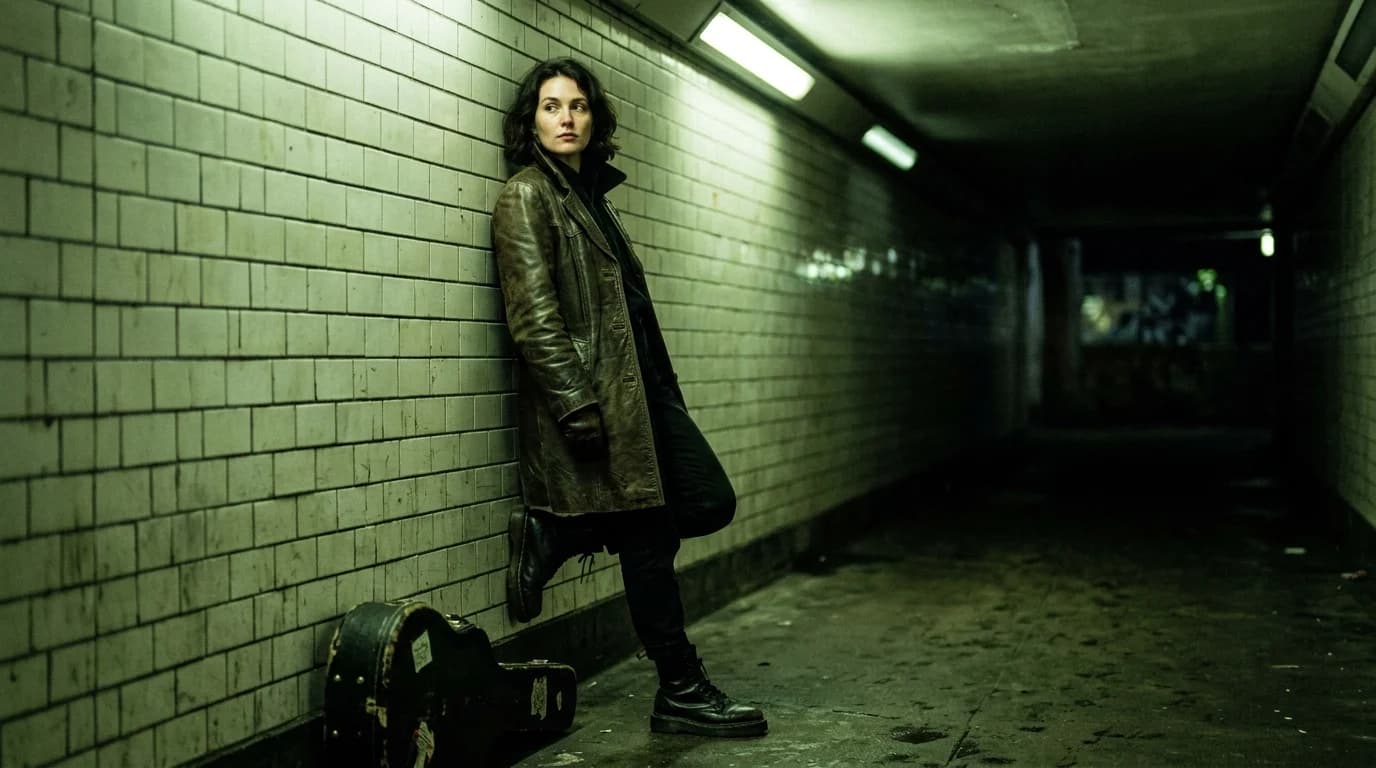
Fashion doesn't happen in a vacuum. The silhouettes, fabrics, and aesthetics on LVMH Prize shortlists and graduate shows are shaped by what designers watch, listen to, and absorb from broader culture. In 2026, film and music are the two strongest outside forces feeding fashion's visual direction.
This isn't about product placement (a character wearing a brand in a movie) or celebrity fashion (a musician's red carpet picks). It's the deeper current: how filmmakers and musicians create visual worlds that designers then translate into garments.
Film: the visual language upstream
Designers have always pulled from film. Yves Saint Laurent cited Visconti. McQueen cited Kubrick. What's different in 2026 is which filmmakers are reaching the current generation.
The Daniels and maximalist composition. Everything Everywhere All at Once (2022) didn't just win Best Picture. It showed a generation of designers that visual maximalism can carry emotional precision. The approach — layered realities, clashing aesthetics, humor and beauty in the same frame — appears in collections that mix fabrics and proportions with deliberate dissonance rather than harmony.
Several emerging designers cite the film as an influence not on specific garments but on permission. Permission to be loud, to clash, to combine references that have no obvious business together. In a fashion moment otherwise dominated by quiet luxury and restraint, this counter-current is worth watching.
Celine Sciamma and the female gaze in color. Sciamma's work (Portrait of a Lady on Fire, Petite Maman) has shaped how female and non-binary designers approach color and light. The specific palette — deep blues against warm candlelight, muted greens against pale skin — appears in color choices across womenswear collections. The visual language is intimate, warm, deliberate, and it reads as an alternative to the cold precision of most fashion photography.
Park Chan-wook and architectural darkness. Decision to Leave (2022) and the broader Park Chan-wook aesthetic — controlled, composed, draped in shadow with sharp moments of color — runs through the editorial direction of several Korean and Asian-diasporic designers. The tailoring precision of Park's characters' wardrobes has pushed designers toward structure without stiffness: garments that are sharp but move.
The sci-fi resurgence. Dune: Part Two (2024), Blade Runner 2049's continued aesthetic influence, and the broader return to science fiction in prestige film have fed a strand of fashion that treats fabric as world-building material. Coats that look like they belong on another planet. Garments that suggest environments rather than occasions.
Music: the subcultural feed
Music shapes fashion through subcultures more than through individual artists. The visual identity of a genre or scene creates a wearable aesthetic that fans adopt and designers observe.
Hyperpop's aftermath. The hyperpop moment peaked around 2021-2023 (100 gecs, SOPHIE, Charli XCX pre-brat). By 2026, its fashion influence has settled into a specific visual vocabulary: metallics, holographics, intentionally artificial textures, asymmetric proportions. The garments look digital even in physical form. Thevxlley, one of the LVMH Prize semi-finalists, draws from this club-influenced, post-internet aesthetic.
Brat and the anti-glamour shift. Charli XCX's brat (2024) crystallized an aesthetic that had been building in club scenes: neon green, deliberately unflattering proportions, confidence through nonchalance rather than polish. The fashion influence shows up in garments that play with ugliness — oversized shapes, raw edges, cheap-looking fabrics paired with expensive construction. The attitude is the design.
Japanese ambient and minimalist fashion. The continued global audience for Japanese ambient music (Hiroshi Yoshimura, Midori Takada, newer artists like Ichiko Aoba) feeds a visual minimalism that appears in fashion as restrained silhouettes, natural fabrics, muted palettes, and a general quality of stillness. Shinyakozuka and Ssstein from the LVMH Prize shortlist design menswear that carries this aesthetic, though neither would likely cite ambient music as a direct reference.
Afrobeats and African diasporic fashion. The global reach of Afrobeats (Burna Boy, Tems, Rema, Ayra Starr) has brought West African visual aesthetics into mainstream fashion consciousness. Bold color, patterned textiles, structured volumes rooted in traditional garment forms. Iamisigo and Yoshita 1967 create fashion from these traditions. The music builds the audience. The designers build the garments.
How cultural influence becomes fashion
The pipeline follows a recognizable structure.
Stage 1: The work. A film or album creates a visual world. Viewers and listeners absorb it.
Stage 2: The mood. That visual world becomes a mood, feelings associated with specific colors, textures, proportions, lighting. "It felt like that scene in..." becomes how designers communicate intent to each other and to collaborators.
Stage 3: The reference. Designers fold the mood into mood boards, AI-generated concept imagery, and collection briefs. The film or music reference sits alongside fabric swatches and silhouette explorations.
Stage 4: The garment. The reference translates into physical design decisions. A color palette from a Sciamma film. A proportion from a Daniels composition. A textural direction from a music scene's aesthetic. The garment doesn't copy the reference. It translates the feeling into cloth.
Stage 5: The trend. When enough designers translate similar cultural references into garments, a trend becomes visible. Press names it. Consumers recognize it. The cultural origin may or may not get credit.
What this means for AI fashion generation
Film and music references work as AI prompts when you describe the aesthetic rather than name the source.
"Warm candlelight color palette, deep blue shadows, intimate composition" translates the Sciamma influence. "Sharp tailored structure, composed framing, dramatic shadow play" translates Park Chan-wook. "Metallic textures, holographic finishes, deliberately artificial surface" translates hyperpop aesthetics.
These descriptions activate visual patterns in the AI's training data because the same aesthetic language appears in fashion criticism, editorial captions, and stylistic descriptions that the model learned from.
The AI won't generate "Sciamma-influenced womenswear" from that phrase alone. But it will generate womenswear with those visual properties if you describe them in terms the AI understands.
FAQ
How does film influence fashion design?
Through visual language. Films create worlds with specific palettes, lighting, proportions, and moods. Designers absorb these and translate them into garment decisions: color choices, fabric selection, silhouette direction, editorial presentation. The influence is indirect. Garments don't copy films, they translate the film's visual feeling into cloth.
Which films are influencing fashion in 2026?
The Daniels' maximalist composition (permission to clash), Celine Sciamma's color and intimacy (warm palettes, female gaze), Park Chan-wook's architectural precision (structured garments with movement), and the broader sci-fi resurgence (garments as world-building).
How does music influence fashion differently from film?
Music operates through subcultures. A genre's visual identity — what fans wear, what videos look like, what the live experience feels like — creates a wearable aesthetic that designers observe and translate. Film operates through singular visual worlds that individual designers reference.
Can I use film/music references in AI fashion prompts?
Describe the aesthetic, not the source. "Warm candlelight palette with deep blue shadows" works better than "Sciamma-influenced." The AI responds to visual property descriptions from its training data, not to filmmaker or musician names.