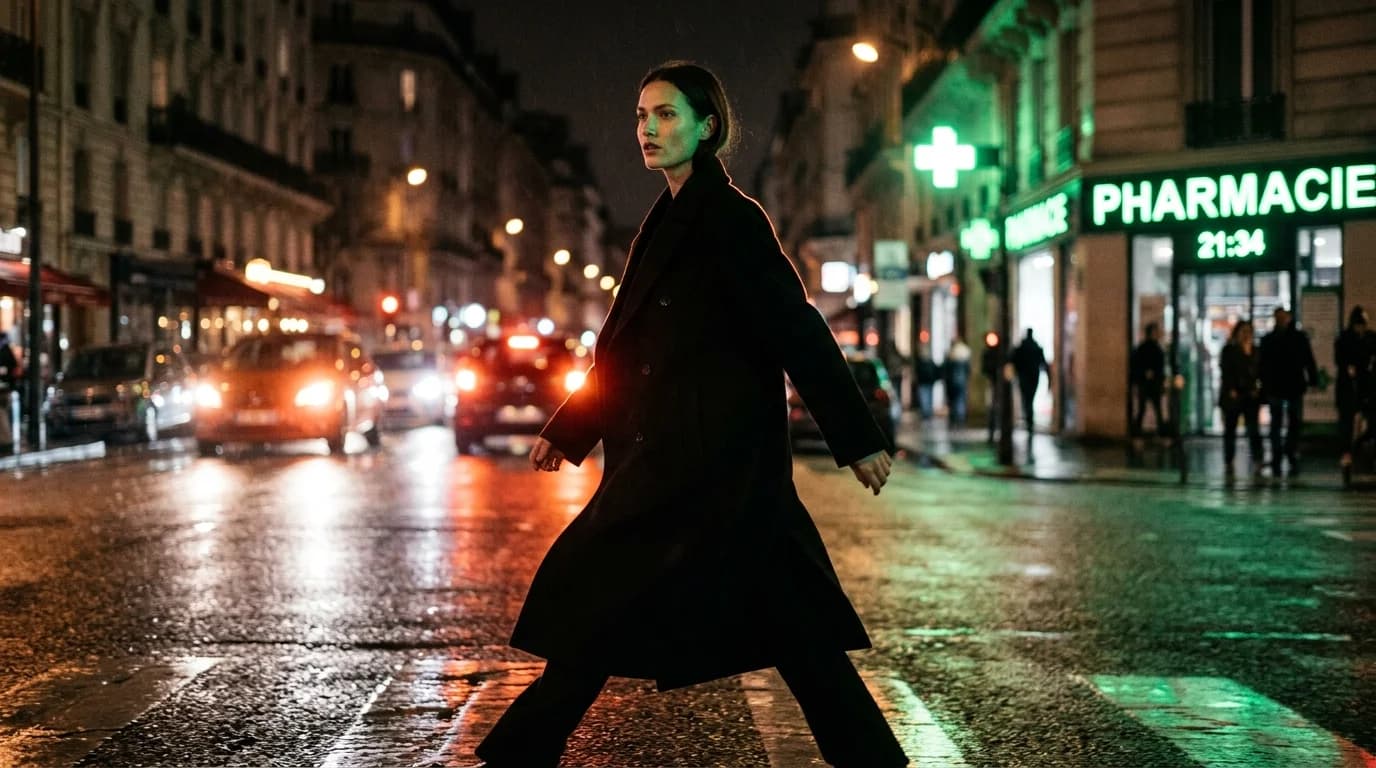
Art direction is the difference between a garment floating in space and a fashion photograph. It's every decision that isn't the garment itself: where the camera sits, how the light falls, what's in the background, how the model is posed. In real photography, the art director makes these calls on set. In AI generation, you make them in the prompt.
Most AI fashion prompts are garment descriptions with "studio lighting" tacked on. The output is technically correct and editorially dead. Three or four intentional composition choices transform the result from a render into a photograph with a point of view.
This is the art director's toolkit for AI fashion image generation. It builds on everything we've covered: garment description, lighting, styling, color, and silhouette control.
Camera angle
Where you place the camera changes what the image communicates.
Eye level is neutral. The viewer meets the model as an equal. Standard for lookbook and commercial work. The garment reads straight. No distortion, no drama, just the garment as it is. This is the default and the most reliable.
Low angle (looking up) gives the model power and height. The garment takes on authority. Structured tailoring and outerwear look particularly strong from below. The angular shapes become imposing. Specify: "low camera angle, looking up at model."
High angle (looking down) makes the model appear smaller and more vulnerable. It emphasizes the top of the garment: shoulder construction, necklines, drape across the chest. Good for close-up detail work. Poor for full-silhouette shots because it foreshortens the figure. Specify: "high camera angle, looking down."
Three-quarter angle is the editorial workhorse. Camera slightly to one side, between front and profile. Shows the garment's depth and dimension: how a lapel rolls, how a sleeve falls, how fabric sits against the body at an angle. More dynamic than straight-on, less dramatic than low angle. Specify: "three-quarter camera angle, slightly to the left/right."
Composition
Where things sit in the frame.
Centered composition. Model dead center, equal space on both sides. Clean, symmetrical, commercial. The garment is the obvious subject. Nothing competes. Standard for lookbooks and product photography.
Off-center / rule of thirds. Model placed to one side, space on the other. Creates visual tension. The empty space becomes part of the composition. More editorial than centered. Specify: "model positioned in the left third of the frame, negative space to the right."
Tight crop. Frame cuts the model at the waist, thigh, or chest. Shows only part of the garment but shows it large and in detail. Good for fabric-focused shots and construction details. Specify: "tight crop at the waist, showing only the upper body and garment."
Full body with breathing room. Model full-length with space above the head and below the feet. The garment sits within the frame rather than filling it. This gives the image a gallery quality. The photograph becomes an object, not just a record of a garment. Specify: "full body, generous negative space above and below."
Mood boards as prompt references
The most effective art direction prompts reference a visual tradition.
"1990s editorial fashion photography" activates a specific aesthetic: high contrast, strong shadows, minimal post-processing, raw and slightly confrontational. Kate Moss, Juergen Teller, The Face magazine. The AI has deep training data for this era.
"Clean commercial fashion photography" activates the lookbook default: soft lighting, white or neutral background, product-focused, no drama. What you'd see on SSENSE or Net-a-Porter.
"Film noir fashion" activates dramatic side lighting, high contrast, deep shadows, moody atmosphere. Works well with dark fabrics and structured garments.
"Soft natural light editorial" activates window light or overcast outdoor light, warm tones, intimate setting, Scandinavian simplicity. Works well with natural fibers and neutral colors.
These references work because the AI has seen thousands of images matching each aesthetic. Name the tradition and you get access to all its visual conventions in a few words.
The complete art direction prompt
[Garment] + [styling] + [model direction] + [camera angle] + [composition] + [lighting] + [setting] + [photography reference]
Example: "A-line midi dress in midnight silk charmeuse with cowl neckline, styled with pointed black heels and simple gold earrings, model in three-quarter view looking off-camera, three-quarter camera angle slightly to the left, rule-of-thirds composition with negative space, single key light from upper left with warm rim light, dark minimal interior, 1990s editorial fashion photography"
That prompt has 9 intentional art direction decisions. The AI gets clear instructions about what to make AND how to photograph it. The output reads as a photograph with a vision behind it.
FAQ
What's the difference between a garment prompt and an art-directed prompt?
A garment prompt describes what the garment looks like. An art-directed prompt also describes how to photograph it: camera angle, composition, lighting mood, setting, and photographic style. The garment prompt gives you a render. The art-directed prompt gives you a photograph.
How many art direction terms should I include?
Three to four beyond the garment description: camera angle, composition style, lighting setup, and a photography reference. More than that and the AI may start ignoring lower-priority instructions.
What camera angle works best for AI fashion?
Eye level for reliability. Three-quarter for editorial depth. Low angle for authority and drama. The choice depends on what the image needs to communicate about the garment.
Can I reference specific photographers in AI prompts?
Named photographer references can work but tend to be inconsistent. The AI may associate the name with a specific era of their work or miss the reference entirely. Describing the aesthetic is more reliable: "high contrast, strong shadows, minimal post-processing, 1990s editorial" communicates the Juergen Teller look without needing his name.