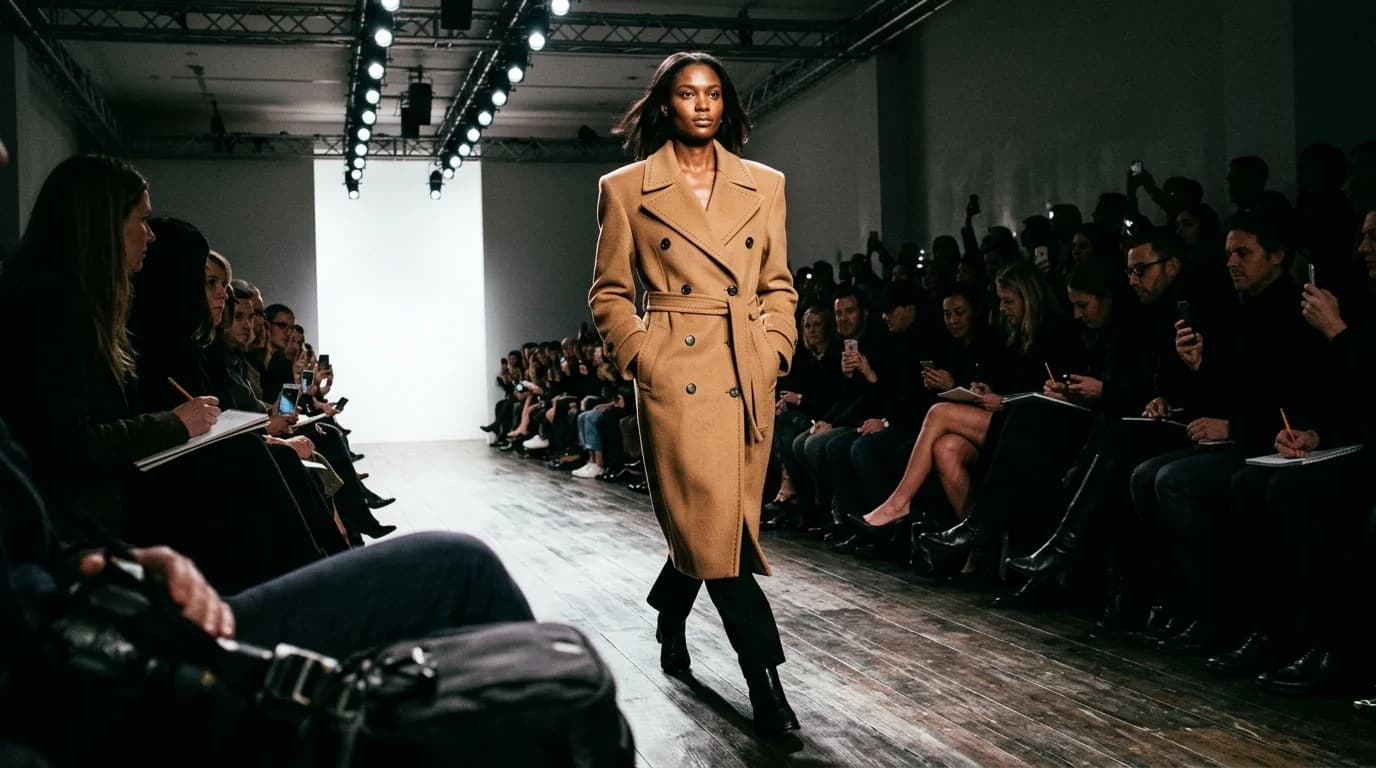
Most fashion show coverage tells you what the collection was "about." The designer was inspired by 1970s California. The mood was nostalgic. The palette was earthy. None of this helps you understand what actually happened on the runway.
Read the garments. The silhouettes, the fabrics, the construction choices. Those decisions are visible in the images if you know what to look at. The press release can wait.
Here's a vocabulary primer for decoding fashion trends at the garment level.
Look at the silhouette first
Before you register color or fabric, look at the shape. Hold your hand over the details in a runway photo and just see the outline.
Is the shoulder natural or exaggerated? A dolman sleeve reads completely differently from a structured shoulder pad. Both widen the shoulder line, but dolman creates a soft wing shape; padding creates a hard geometric one.
Where does the waist fall? An empire waist just below the bust says something different than a dropped waist at the hip. Empire references Regency, 1960s Courreges, maternity wear. A dropped waist pulls from the 1920s, early 2000s, and deliberate anti-body proportion.
How much volume? A cocoon coat that balloons away from the body tells you what the designer believes about the relationship between cloth and the person inside it. A column dress that follows every contour argues the opposite. The choice is intentional, and one of them is usually wrong for the moment. The interesting question is which.
When the same silhouette repeats across multiple looks, pay attention. Eight out of 40 looks with oversized, dropped-shoulder proportions? The designer has a position on how bodies should be dressed right now. That repetition is the signal worth tracking.
Read the fabric choices
Fabric is where the money is, literally. A designer's fabric selection reveals their budget, their suppliers, and their technical ambition.
Weight and drape reveal intent. A collection in heavy wool and tweed is built for structure and longevity. Those garments hold their shape on a hanger and read as investment pieces. Switch to silk charmeuse and chiffon and everything changes: the fabric does the talking, and it's talking about movement and sensuality.
Unusual fabrications signal ambition. When a designer forces organza into a tailored blazer — a fabric that wants to be sheer and floaty, now holding a structured lapel — they're flexing technical skill. Making organza behave like suiting is harder than using wool. That difficulty is the point.
Mono-fabric collections are a bet. If every look uses linen, the designer has committed to a material thesis. Sustainability, Mediterranean reference, a love affair with wrinkles. The reason matters less than the commitment. One fabric across 40 looks takes conviction.
Watch the mixes. Leather paired with jersey. Tweed jacket over a silk charmeuse slip. Fabric combinations within a single look create tension: hard against soft, matte against sheen, heavy against light. Those pairings are deliberate and they expose the collection's internal logic faster than any theme statement.
Decode the construction
Construction is the hardest element to read from photos but the most revealing. It separates designers who think about garments from designers who think about surface.
Visible seaming is deliberate. Most garments hide their seams. Exposed, topstitched, or raw-edged seams mean the designer wants the construction on display. This is the language of deconstruction: showing the architecture rather than concealing it.
Bias cutting shows up in how fabric falls. You can spot a bias cut in runway photos by the way fabric clings and flows diagonally across the body. Straight-grain garments hang vertically. Bias-cut garments follow the body's curves with a slight diagonal pull. Once you've seen it, you can't unsee it.
Draping versus darting. A draped garment achieves shape through the fabric's fall and strategic anchor points. A darted garment gets there through stitched tucks that remove excess fabric. Draping looks softer, more fluid, sometimes slightly improvised. Darting looks cleaner, more precise. Most designers lean heavily one way, and that preference defines their house.
Tailoring details betray training. A well-canvassed blazer with a proper roll line through the lapel — where the fabric turns over smoothly rather than folding at a hard crease — indicates someone who learned traditional tailoring. Set-in sleeves with a clean cap, properly eased into the armhole. These small details separate a tailored garment from a garment that merely looks like one.
Watch the accessories and styling
Accessories in a runway show are editorial choices. The shoe changes the silhouette: a chunky platform shifts proportions one way, a pointed heel another. A flat sandal under a formal gown introduces dissonance, and that dissonance is the decision.
Bags, belts, jewelry. The styling team uses these to communicate mood. They're secondary to the garments. Don't let a dramatic headpiece distract you from a beautifully cut shoulder.
Same goes for hair and makeup. They set a tone but say nothing about the clothes. Bare faces with undone hair? The garments are supposed to carry it. Heavy theatrical makeup? The designer is world-building, not dressing people.
The order of looks matters
Collections aren't random sequences. The opening look sets the tone. The finale is the big statement. Everything between has a deliberate pacing.
Most designers group looks: a block of tailoring, then evening, then knitwear. Those groupings reveal how the designer categorizes their own work and where they think the strength lives.
The exit look — the last one before the designer takes a bow — encapsulates the collection. A structured coat means the collection is about architecture. A flowing gown means movement. Something weird and conceptual? The designer is betting on the idea over the commerce, which is either brave or delusional depending on who's buying.
Putting it together
When you look at a runway collection with design vocabulary, work in layers. Start with silhouettes: what shapes repeat, where volume sits, how the garment relates to the body. Then fabrics: the dominant material, unusual combinations, what the weight suggests about intended context. Then construction: whether you can see how the garments are built, whether the structure is hidden or displayed, what the craftsmanship level tells you.
This gives you more useful information than any review that talks about "the mood" or "the narrative." The garments are the narrative. You just need the vocabulary to read them.
FAQ
Do I need fashion training to understand runway shows?
No. You need vocabulary. Name the silhouette, the fabric, and one construction detail, and you'll read a collection better than most fashion journalists who default to mood descriptions. The AI fashion image generation guide explains the garment and material language used throughout Moire's workflows.
What should I look at first in a runway photo?
The outline. Block out the details mentally and just look at the shape of the garment against the body. Wide or narrow? Where does the volume sit? Where does the garment break from the body? Silhouette is the foundation of every design decision that follows.
Why do designers repeat the same silhouette in a collection?
Repetition is emphasis. If a shape appears across multiple looks in different fabrics and colorways, the designer is telling you: this is the core idea. Think of it as bolding a sentence. The repeated silhouette is what you're supposed to remember when you leave.
How can I tell expensive construction from cheap construction in photos?
Look at how fabric sits at the shoulder and how lapels roll. A well-made garment has clean lines where the fabric transitions between body and sleeve. Cheap construction shows puckering, pulling, or hard creases where there should be soft rolls. The collar is another giveaway: it should lie flat against the neck without gaps. If it doesn't, someone cut corners.